
Birds · Mabamba Swamp, Uganda
The Shoebill: A Journey to a Prehistoric Wonder of Nature

By Rocco Scanzuso, Photographer · Feb 9, 2025 · 5 min read
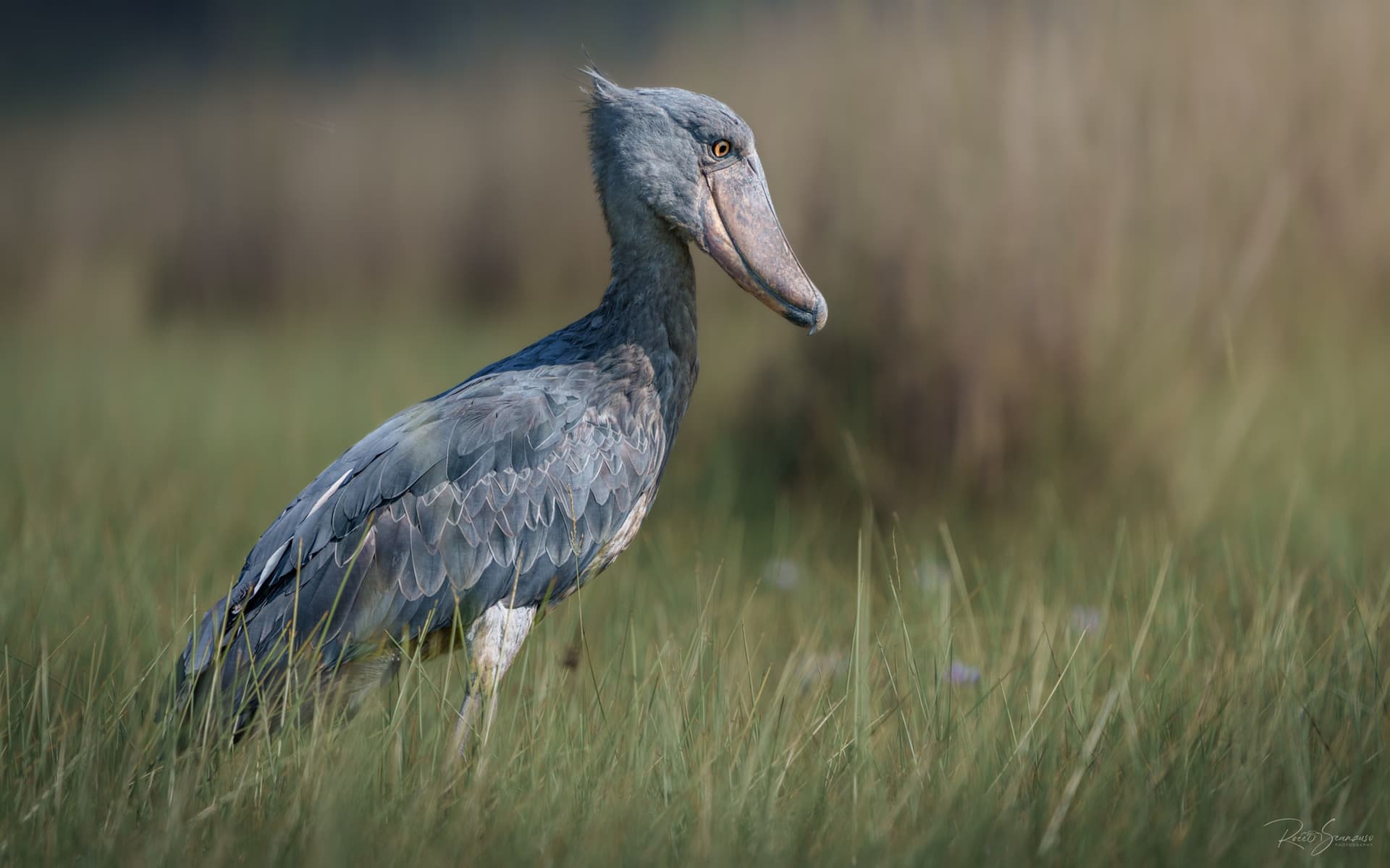
Uganda, the land of untamed wilderness, dense rainforests, and fascinating wildlife, has always captivated me. This time, among other things, I had a special goal in mind: the shoebill (Balaeniceps rex). This magnificent, almost mystical creature is not just a bird but a journey into the past of evolution. As someone who has spent countless hours behind the lens, capturing the untamed beauty of the natural world, I felt that this moment would be unique. It was more than just a photography mission – it was a deep dive into a world so ancient, it feels otherworldly.
A Morning Expedition
Early in the morning, as the mist still hung heavily over the dense swamps, I set out with a small group of local guides. We silently glided through the calm waterways of the Mabamba Swamp on a boat, one of the best places in the world to spot the shoebill. The gentle splash of water and the chirping of awakening birds accompanied us, the only sounds in the otherwise still air. My camera was ready, but my heart was even more so. My eyes scanned every corner of the reeds, hoping to catch sight of this extraordinary creature.
And there it was – majestic, motionless like a statue, with its enormous, clunky beak that gave it its name. In moments like these, when the camera clicks, it’s more than just a photo; it’s a story, a connection. My heart raced. The shoebill appeared like a being straight out of a paleontology book. I’ve photographed wildlife around the globe, but the moment you face a shoebill, you know you’ve encountered something ancient, something that stirs a deep sense of awe.
A Giant Among Birds
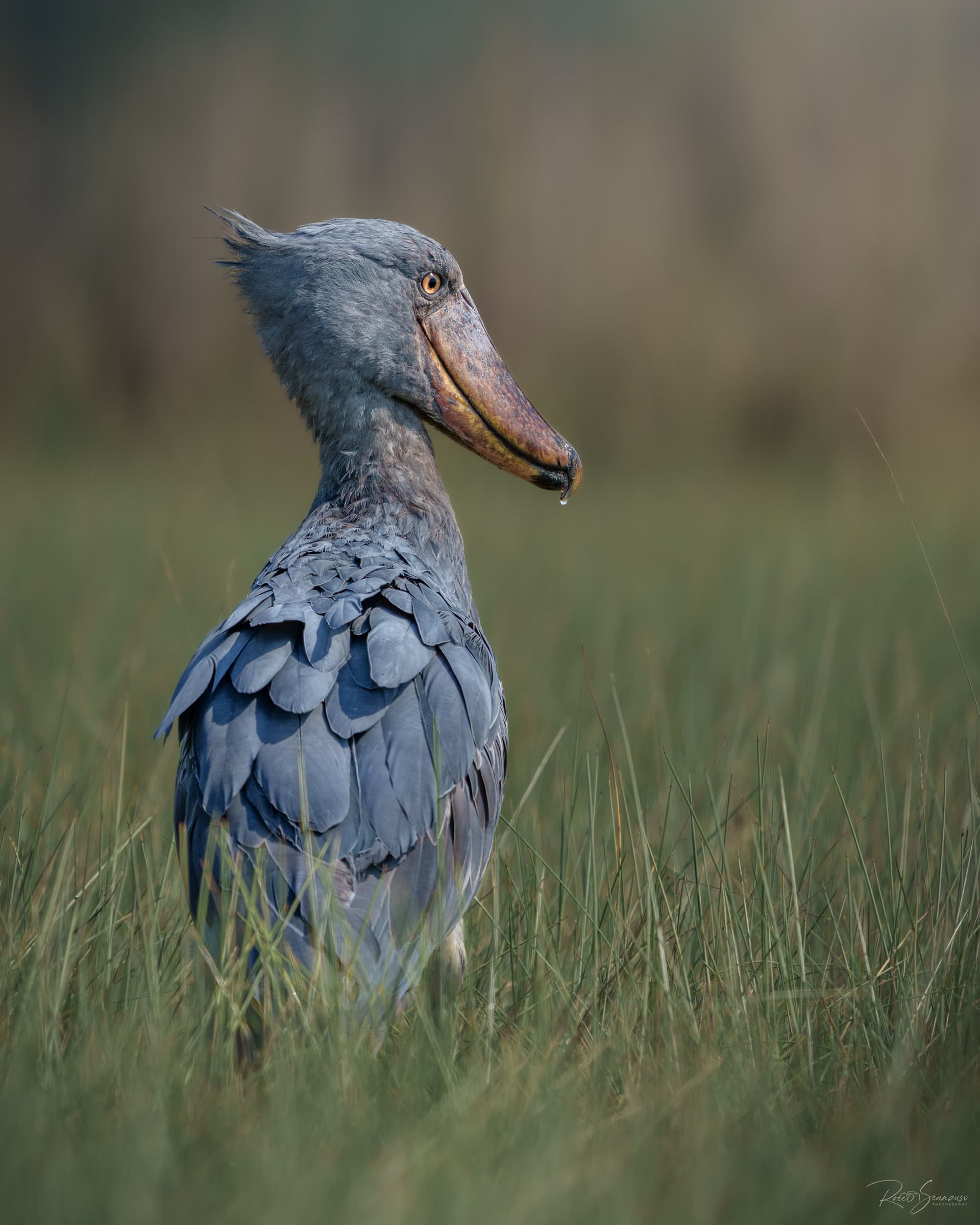
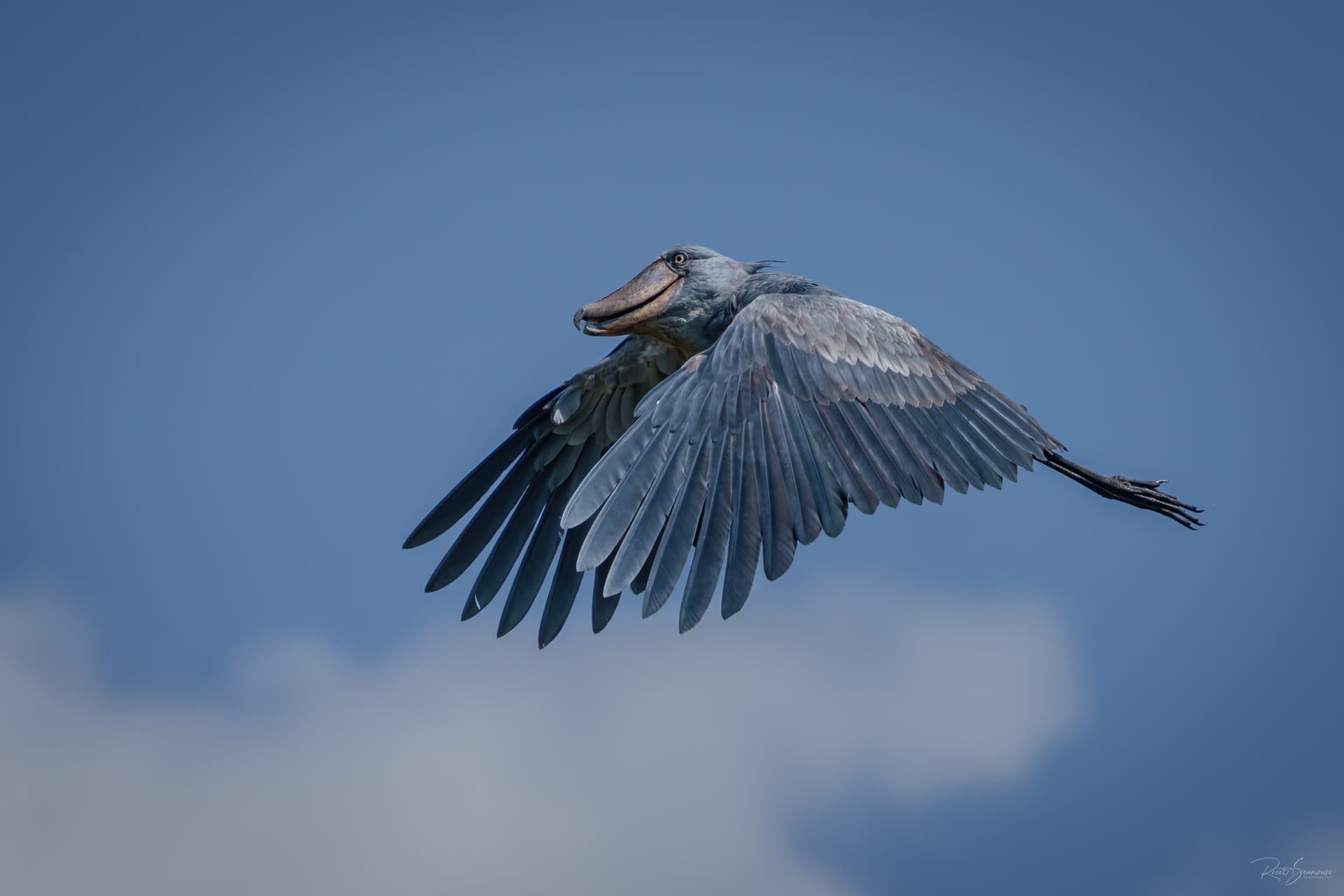
The shoebill is impressively large – standing up to 1.5 meters tall with a wingspan of around 2.5 meters, it is one of the giants of the avian world. Its massive beak, shaped like an old-fashioned wooden shoe, can reach up to 24 centimeters in length. But it’s not just its size that fascinates; it’s also its incredibly deliberate and calm demeanor. As a wildlife photographer and videographer, patience is something I’ve learned to master, much like the shoebill itself. There’s a sort of kinship in standing still, waiting for nature to unfold in front of you, waiting for that perfect moment when everything aligns.
Habitat and Diet
Shoebills are true specialists of their habitat. They thrive in the swamps and wetlands of Central and East Africa, particularly in Uganda, South Sudan, Zambia, and Tanzania. Their primary diet consists of fish such as lungfish, tilapia, and catfish. However, they also feed on amphibians, small reptiles, and even young waterfowl. With incredible patience, the shoebill stands motionless, waiting to strike with lightning speed – a spectacle I was fortunate enough to witness firsthand. Capturing this moment through my lens was like freezing a second in time that felt timeless, showing the delicate balance of life in the wild.
Endangered Species
Sadly, the shoebill is classified as endangered. It is estimated that there are only about 5,000 to 8,000 individuals left worldwide. Habitat destruction due to swamp drainage, climate change, and illegal wildlife trade are the greatest threats to these unique birds. This aspect of wildlife photography always brings a sense of responsibility. When I document animals like the shoebill, it’s not just for admiration; it’s a call to action. Through my work, I aim to evoke the same emotions in others, hoping that by seeing these images, people will feel inspired to take part in protecting what remains of our planet’s wild spaces.
Are Shoebills “Living Fossils”?
Shoebills are often referred to as “living fossils” due to their prehistoric appearance, reminiscent of the dinosaur era. They indeed belong to an ancient group of birds closely related to herons and pelicans. Their archaic look and primitive hunting methods give us a glimpse into what the avian world might have looked like millions of years ago. Capturing the essence of a “living fossil” through the lens brings an entirely different challenge. It’s not just about the visual—it’s about encapsulating the feeling of stepping back in time, of witnessing something that connects us to the distant past.
Gender Differences and Reproduction
Male and female shoebills look almost identical, making it difficult to distinguish them in the field. Their reproduction is as fascinating as their appearance. During the dry season, between December and May, shoebills build massive nests made of reeds and grasses. The female typically lays two eggs, but often only one chick survives as the stronger sibling outcompetes the weaker one. The incubation period lasts about 30 days, and the parents care for their chick intensively until it fledges. These are the stories I want to tell through my photography—how life in the wild isn’t just beautiful but often harsh and unforgiving. Each picture becomes a window into this reality.
Behavior and Observations
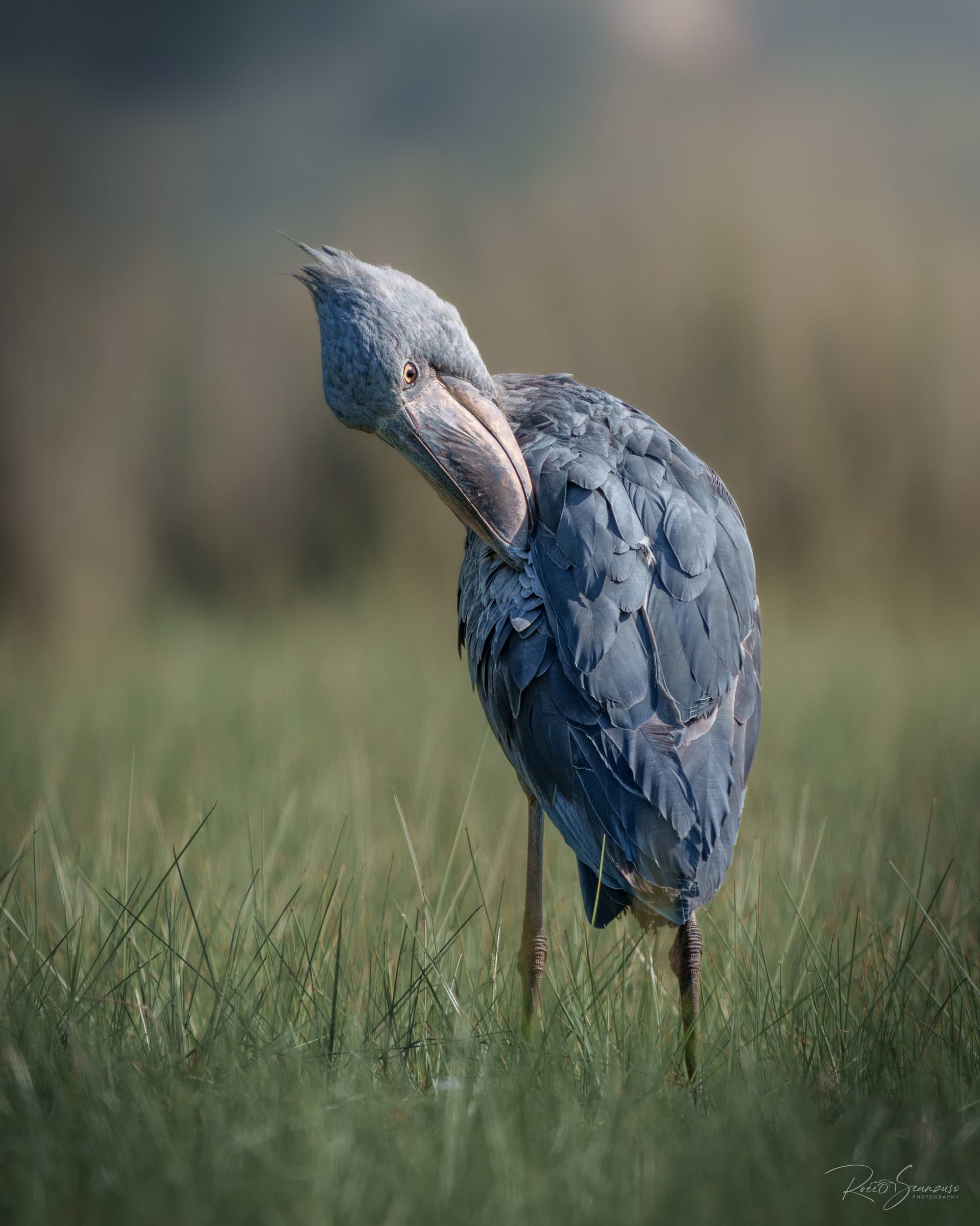
The shoebill is a silent observer of its environment. Its motionless stance and immense patience make it a master of camouflage. However, when it moves, it does so with an elegant slowness, appearing like a dignified ruler of its domain. Its deep, rumbling calls are rarely heard but add to its prehistoric aura. Capturing its behavior was challenging yet rewarding, and every click of the shutter felt like a connection to this regal bird’s ancient lineage.
An Unforgettable Experience
Encountering the shoebill was one of the most awe-inspiring experiences of my life. Although I did not travel to Uganda solely for this bird and had many other goals in mind, this encounter remains unforgettable. Observing this majestic creature in its natural habitat not only filled me with deep respect for nature but also inspired me to raise awareness about the conservation of these unique birds. On every future trip to Uganda, I will once again explore the swamps, hoping to encounter a shoebill. My work, after all, is not just about documenting wildlife; it’s about creating a deeper connection between people and the natural world.
Uganda, the shoebill, and the wilderness have captured my heart – and perhaps yours, should you one day have the chance to witness this magnificent creature yourself. Through my lens, I aim to remind us all that we are part of this planet, and the responsibility to protect it lies within each of us.
Written by
Photographer
Rocco ScanzusoRocco Scanzuso is a wildlife photographer and videographer who finds his creative center in nature. Through photography and film, he reminds audiences that people are part of the planet and share a responsibility to protect it. His work tells stories, evokes emotion, and strengthens connection to the natural world. Traveling to remote wild places, he captures the beauty of wilderness to inspire environmental preservation.
Read full profile →Related stories
- Birds
 Agartala, IndiaNew
The Rarest Bird in Agartala: a Global Story of Birds Disappearing in Plain Sight
In a north-eastern Indian town where old trees fall and ponds are filled overnight, the scarcest species isn't a bird at all. It's the birdwatcher, and noticing may be the simplest conservation there is.

Dhrubajyoti Bhattacharjee
Jun 30, 20267 min
- Wildlife
 Holbox Island, Mexico
Holbox Wildlife: How Urbanization Is Reshaping Mexico's Yucatán Peninsula
On a sandbar island where flamingos still wade the shallows, rapid development is rewriting the rules of coexistence between people and the wild.

Tamara Blazquez Haik
Feb 17, 20266 min
- Wildlife
 Svalbard, Norway
Climate Change and the Arctic Fox: The Red Fox Invasion
As the Arctic warms, the red fox is pushing north into territory the arctic fox has held for millennia — a quiet contest with the climate as referee.

Jacob Buck
Aug 15, 20244 min
- Marine
 French Polynesia
Guardians of the Deep: Lessons from Humpback Whales on Conservation and Connection
What the great migrations of humpback whales can teach us about resilience, recovery, and the threads that link distant oceans.

Rachel Moore
Mar 5, 20254 min
- Fungi
 Zurich, Switzerland
The Secret Kingdom of Fungi Beneath the Soil
Beneath every forest floor runs a living network of fungi — the quiet architecture that feeds the trees and holds the ground together.

Gulce Tekin
Aug 22, 20246 min
- Wildlife
 Etosha & the Namib, Namibia
The Enchantment of African Wildlife: A Photographer's Heaven
From dawn light on the savanna to the hush before a sighting, a photographer's love letter to the continent that first taught them to look.

Amber
Nov 6, 20245 min
- Marine
 Playa del Carmen, Mexico
Diving with Bull Sharks in Playa del Carmen: Breaking the Myths and Supporting Conservation
Face to face with one of the ocean's most feared predators — and the divers turning fear into protection on Mexico's Caribbean coast.

Diana & Wynand
Oct 3, 20244 min
- Macro
 Basque Country, Spain
Our Tiny Companions: The Wonderful World of Microscopic Organisms
The unseen multitudes in a drop of pond water do the quiet work that keeps every ecosystem standing.

Iker Duro Linares
Nov 11, 20255 min