_edited.png)


Discover, Learn and Protect with Jeremiah Winden, macro photographer and explorer
- Magni Macro

- Dec 14, 2025
- 5 min read
Whether into the depths of caves or the forests of Costa Rica, Jeremiah Winden does not see anything as too great an obstacle to venture into the world and find unique and common insects, arachnids, amphibians, and reptiles alike, many of which can be as tiny, or even tinier, as a thumb! But his photography involves more than just taking pictures.
In this interview, he honoured us by telling us more about his goals, hopes, and dreams to be part of a change in helping nature, on the front of the animals that many people tend to avoid and even fear.
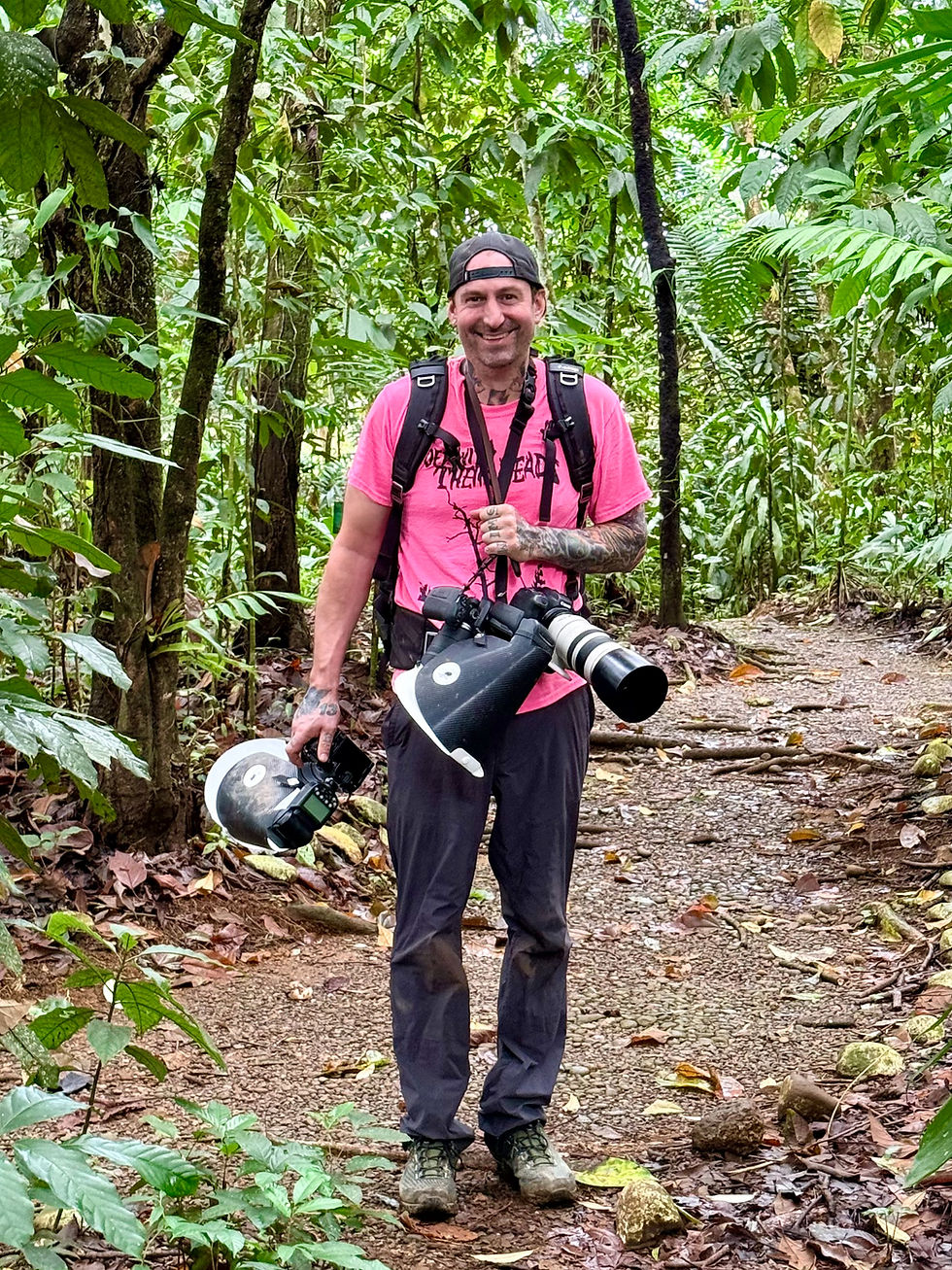
To start off, could you tell us a little about yourself and how your journey into the world of nature and macro photography began?
My name is Jeremiah Winden, and I have had a passion for photography and wildlife since I was a little kid. Looking at my grandparents' National Geographic magazines for hours and hours. Seeing tribes in Africa and reptiles in the Amazon filled my head with a desire to photograph these scenes early on. Waiting every month for my Ranger Rick magazine to come in the mailbox was a highlight of my youth.
Was there a particular moment or experience that sparked your fascination with observing and capturing the macro world? How has that shaped your goals or perspective over time?
We were travelling a lot and were planning a trip back to Costa Rica. My friend Kris told me to take a night tour with Sierpe Frogs to shoot macro. So I purchased my first macro lens, and on January 24’ I went out for a night with Raby Núñez and my mind was blown. Something awoke inside me, and my life completely changed that night.
Having traveled to many countries, what differences or changes have you observed in the world of insects and arachnids? Is there a particular experience or realization that has stayed with you, perhaps something that reflects a broader environmental shift, for better or worse?
Having travelled to several countries now to shoot macro, the thing that stands out to me the most is the local people passionate about protecting the environment and wildlife. It gives me hope that there are so many people dedicating their lives to conservation.
When comparing the insect life across the countries you’ve visited, what stood out to you the most? Were there contrasts that surprised or inspired you?
The thing that stands out a lot to me is seeing a lot of similar insects and invertebrates that I have in my own backyard in New England, but how they differ in other regions because they have evolved to adapt to their surroundings. Take for instance leaf-mimicking katydids; they had to adapt to ensure survival.
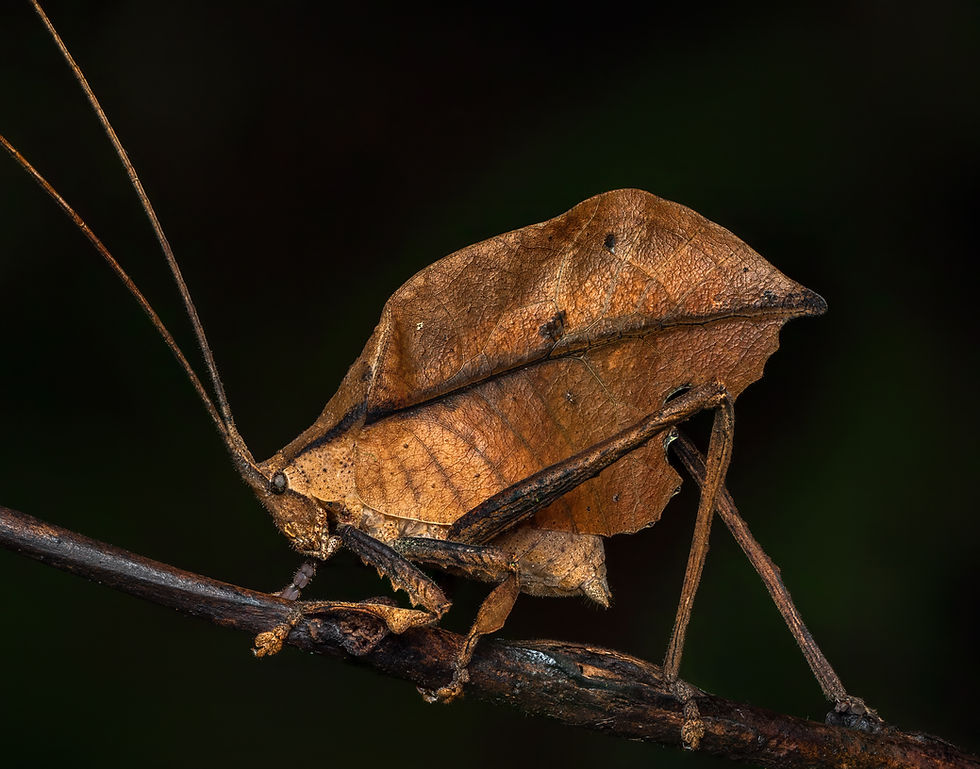
Have you met people who dedicate their time to the conservation of insects, arachnids, or reptiles? Could you share one or two encounters that influenced or inspired your own approach to photography or environmental awareness?
Being in the Ecuador cloud forest with Jaime Culebras and watching him climb a mudslide washout on a steep cliff because he heard the frog I wanted to see so badly. He called back and forth to the frog and found its location high up a tree on the side of this washout. He did this because he has so much passion for frogs. We had talked prior about my hope to see this species, and they wanted me to have that experience.

Have you personally taken part in any conservation projects involving insects, arachnids, or reptiles? If so, what did that experience teach you? If not, is this something you’d like to pursue in the future?
I have not taken part yet in conservation projects per se, but I do feel photography is a great tool to share the beauty of nature and the insect world. Through my lens I have the ability to reach people all over the world and have had many people tell me that my images have helped them overcome their fear of insects.
You’ve visited Costa Rica more than once, what draws you back to this colorful country? What makes it so special to you as a macro photographer and nature observer?
Costa Rica is mi casa. I have never been anywhere before that has made me feel so connected. The earth's frequency here resonates in my soul, and this connection is as close to a spiritual and enlightened experience as I have ever had. It’s not just the people, the landscape or the wildlife. It’s just… well, it’s Pura Vida.
Could you share one of your most memorable adventures or discoveries during your night explorations in Costa Rica?
My friend Kris and I were in a stream in Centro Manú shooting with our guide Kenneth G. I was shooting some glass frogs, and Kris shouted up the stream to me to come and see and that I was going to be very excited. He said: Look on the underside of this leaf. I’m going up the trail with Kenneth and leaving you be, because I know you will be a while.
There was a clutch of glass frog eggs. Inside each egg was a tiny tadpole. I took some shots, then I just sat alone in the dark. Seeing this tiny life, so precious and just perched above the stream on a leaf like this, was another life-changing moment for me.

While exploring for macro photography, have you ever encountered any wildlife or natural hazards that left a lasting impression, either thrilling or challenging?
While looking for Puma in Corcovado on the Osa Peninsula, Raby came across a primate skull stripped clean. There was a spine close by and other bones scattered about. Seeing something that so closely resembles the human anatomy in the jungle like that, having been eaten by the thing we were searching for, was slightly unsettling.

Is there a particular topic, message, or issue you’d like to raise awareness about through this interview, something you feel more people should know about the natural world?
I think people don’t know how damaging the pineapple plantations are in Costa Rica. Vast miles of forest were removed to plant these small pineapple plants that offer no shade or protection for wildlife and are being sprayed with chemicals that wash into the rivers and estuaries. Poisoning the very land that gives life.
If you could send one message to future generations of nature lovers or photographers, what would it be?
The one thing I could share is to have hope. Hope for our planet and for wildlife. Hope for humanity. It’s not too late to save it.
Finally, what are your hopes and dreams for the future, for nature itself, for your work, and for your personal journey alongside the macro world?
My next step is to leave behind this material consumer world and life I live and the career I hate. To move to Costa Rica and live a simpler life, connected to nature. Where that takes me…the future is unwritten.

An Inspiration to Discover, Learn and Protect the smallest in our World
Thank you, Jeremiah Winden, for the honour of sharing a glimpse of your journey with our readers. Conversations like this remind us how much there is to rediscover when we slow down and reconnect with the world around us. Perhaps your story will encourage all of us to take a few more intentional steps toward nature, pausing long enough to observe, to breathe, and to experience it with the same sense of pure exploration we often leave behind in childhood. It’s in those moments that we find perspective, inspiration, and maybe even a part of ourselves we didn’t know we were missing.


Comments